At OpenXcode, we don’t just recommend performance optimization—we follow these practices in our own projects.
Our website, OpenXcode.com, is built with performance in mind from day one.
Instead of relying heavily on page builders and dozens of plugins, we focus on writing clean code and using modern frontend technologies.
We Use Tailwind CSS Instead of Heavy Frontend Frameworks
One of our recommendations is to use Tailwind CSS whenever possible.
Why?
Because Tailwind CSS allows developers to build modern interfaces without loading large amounts of unnecessary CSS.
Benefits include:
- Smaller CSS files
- Faster page rendering
- Better maintainability
- Improved Core Web Vitals
- Cleaner frontend architecture
Using a utility-first approach also helps us avoid bloated stylesheets that often slow down WordPress websites.
Keep Plugins to a Minimum
One of the most common mistakes we see is websites running 30–50 plugins.
More plugins don’t necessarily mean more features.
Every plugin adds extra code, database queries, JavaScript files, and potential security risks.
Our recommendation:
- Install only plugins that are absolutely necessary.
- Remove inactive plugins.
- Avoid duplicate functionality.
- Regularly update all plugins.
Using fewer plugins can help:
- Improve website speed
- Reduce plugin conflicts
- Lower security risks
- Make maintenance easier
Remember, a website with fewer, high-quality plugins is usually faster and more secure than a website overloaded with plugins.
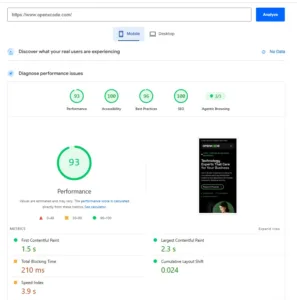
OpenXcode Mobile Performance Example
Below is a real performance test of our own website.
Mobile PageSpeed Results:
- Performance: 93
- Accessibility: 100
- Best Practices: 96
- SEO: 100
Our Philosophy
We believe website speed should be part of the development process—not an afterthought.
When building WordPress websites, we prioritize:
- Clean code architecture
- Tailwind CSS
- Optimized images
- Minimal plugins
- Core Web Vitals optimization
- Mobile-first performance
- Long-term maintainability
These small decisions make a big difference over time.
A fast website doesn’t just improve SEO rankings. It creates a better experience for your visitors and helps businesses grow online.